
by Acuaccounts | Apr 5, 2019 | latest news, tax
Welcome…
To AcuAccount’s April’s Tax Tips & News, our newsletter designed to bring you tax tips and news to keep you one step ahead of the taxman.
If you need further assistance just let us know or you can send us a question for our Question and Answer Section.
We are committed to ensuring none of our clients pay a penny more in tax than is necessary and they receive useful tax and business advice and support throughout the year. Please contact us for advice in your own specific circumstances. We’re here to help!
Making Tax Digital Update
Biggest change from HMRC has come into effect! Meaning VAT-registered businesses with a taxable turnover above the VAT threshold are required to use the Making Tax Digital (MTD) service to keep records digitally and use software to submit their VAT returns from 1 April 2019.
Updated guidance
HMRC have published an updated version of their Making Tax Digital Mythbusters factsheet. The ‘myths’, and HMRC’s comments covered in the factsheet are summarised as follows:
- Businesses don’t know it’s happening or what to do: HMRC state that over 80% of businesses had stated to make preparations for MTD by December 2018
- Everyone will have to join the service by 1 April: Businesses are required to join MTD and submit their VAT returns using the new service for their first VAT period which begins on or after 1 April. For the majority, who file quarterly, their first MTD returns won’t be due until August or later
- Under MTD, businesses will have to provide more information than they already do: business will need to provide information to HMRC more regularly than they do now
- MTD won’t reduce errors: HMRC maintain that the integrated approach offered by MTD will, in the long term, reduce reporting errors
- HMRC have underestimated the admin burden and costs to businesses for MTD: costs will differ from business to business but there are MTD-compatible solutions available at low cost for most businesses
- Businesses can’t use spreadsheets as part of MTD: Businesses can choose to use spreadsheets to both maintain digital records and perform tax calculations, provided the spreadsheets combine with some form of ‘bridging’ software that will allow their VAT return data to be sent to HMRC from the spreadsheet
- Small businesses should be automatically exempt: Only those with taxable turnover above the VAT threshold of £85,000 are required to join MTD, although the c.1m VAT registered businesses below the threshold can choose to join voluntarily.
- HMRC will penalise me if we get the new process wrong: During the first year of mandation HMRC will take a light touch approach to digital record keeping and filing penalties where businesses are doing their best to comply with the law.
For further information on MTD, see the GOV.uk website.
Employee Mileage Allowances
Confusion often arises over differing tax treatment of mileage allowances paid to employees using their own cars for business, and those provided with a company car.
An employee using their own car for work can claim a mileage allowance from their employer, which is designed to cover the costs of fuel and wear and tear for business trips. The mileage allowance will be tax-free if it does not exceed HMRC’s Approved Mileage Allowance Payment (AMAP) rates, which are currently as follows:
Cars and vans: first 10,000 business miles per year – 45p per mile; over 10,000 miles – 25p per mile
Motor cycles: fist 10,000 business miles per year – 24p per mile; over 10,000 miles – 24p per mile
Bicycles: first 10,000 business miles per year – 20p per mile; over 10,000 miles – 20p per mile
Unless the employer reimburses employees at a higher rate, the payments can be paid tax-free and do not need to be reported to HMRC. However, anything paid above the approved rates is tax deductible, and must be reported to HMRC on form P11D.
If an employer pays less than the approved rates, the employee can claim income tax relief from HMRC for the shortfall. This can be done via a self-assessment tax return or by completing form P87.
For NIC, the 45p per mile rate is used for all business miles in the tax year, not just the first 10,000 miles.
The AMAP scheme does not apply for company cars. However, employees can still claim fuel expenses for all business mileage where they pay for the fuel. The rates are lower than the AMAP rates and are updated quarterly. Current and previous rates can be found on the Gov.uk website at https://www.gov.uk/government/publications/advisory-fuel-rates.
Amounts paid in excess of HMRC’s advisory rates will be taxable.
If the company pays for all fuel (business and private), the fuel benefit will be charged, which is based on the cash equivalent of the benefit each tax year. The fuel benefit is fixed each year (for 2019/20 it is £24,100). This figure is multiplied by the CO2 percentage figure applicable to the company car.
It is also worth noting that if the company pays for all fuel, but the employee reimburses the company for private use, as long as the amount paid back is equal to, or more than, the amount for personal fuel in the same tax year, the employer will not have to pay anything to HMRC or report on such transactions.
NMW and NLW increases take effect
New rates for the National Minimum Wage (NMW) and National Living Wage (NLW) (aged 25 and over) apply from 1 April 2019, and employers must ensure that they implement them accordingly. The rates are as follows:
– 25 and over – £8.21 per hour;
– 21- to 24-year-olds – £7.70 an hour;
– 18- to 20-year-olds – £6.15 an hour;
– under 18s – £4.35 an hour; and
– Apprentice rate – £3.90 an hour.
All other workers including pieceworkers, home workers, agency workers, commission workers, part-time workers and casual workers must receive at least the NMW.
Severe penalties may be imposed for failure to comply with NMW/NLW obligations. Broadly, the penalty percentage which may be imposed for non-compliance is now 200%. The maximum penalty is a hefty £20,000 per worker, although it may be reduced by 50% if the unpaid wages and the penalty are paid within 14 days.
Workplace Pension
The minimum contributions you and your staff pay into your automatic enrolment workplace pension scheme will increase from 6 April 2019. This is also sometimes known as phasing.
It is your responsibility to make sure these increases are implemented.
Who does this apply to?
All employers with staff in a pension scheme for automatic enrolment must take action to make sure at least the minimum amounts are being paid into their pension scheme. This applies to you whether you set up a pension scheme for automatic enrolment or you decided to use an existing scheme.
However, you don’t need to take any further action if you don’t have any staff in a pension scheme for automatic enrolment, or if you are already paying above the increased minimum amounts.
What are the increases?
This table below shows the minimum contributions you must pay and the date when they must increase:
| Date |
Employer minimum contribution |
Staff contribution |
Total minimum contribution |
| New rate: 6 April 2019 onwards |
3% |
5% |
8% |
| Current rate: 6 April 2018 to 5 April 2019 |
2% |
3% |
5% |
If you need further assistance on any of the above topics just let us know or you can send us a question.
We are committed to ensuring none of our clients pay a penny more in tax than is necessary and they receive useful tax and business advice and support throughout the year. Please contact us for advice in your own specific circumstances. We’re here to help!
by Acuaccounts | Mar 13, 2019 | latest news, tax
Under Making Tax Digital (MTD) for VAT, which is coming into effect from 1st April 2019, these records must now be kept digitally within functional compatible software. See the following outline as a guide to what HM Revenue & Customs (HMRC) are looking for:
Essential Details
- Your Business Name
- The address of your principal place of business
- Your VAT registration number
- A record of any VAT accounting schemes that you use
For each Supply you Make you must record:
– The date
– The value
– The rate of VAT charged. Where no VAT is charged, you must record whether the supply is zero rated, exempt or outside the scope of VAT.
If you account for VAT using a retail scheme you are not required to keep a separate record of the supplies that make up your Gross Daily Takings (GDT) within functional compatible software.
Values – OUTPUT (SALES)
To show the link between the output tax in your records and the output tax on the return, you must
have a record of:
- The output tax you owe on sales
- The output tax you owe on acquisitions from other EU member states
- The tax you are required to pay on behalf of your supplier under a reverse charge procedure
- The tax that needs to be paid following a correction or error adjustment
- Any other adjustment required by VAT rules
For each supply you Receive you must record:
To show the link between the input tax in your records and the input tax on your return you must
have a record of:
– The date
– The value
– The amount of input tax that you will claim
Values – INPUT (PURCHASES)
To show the link between the input tax in your records and the input tax on your return you must
have a record of:
- The input tax you are entitled to claim from business purchases
- The input tax allowable on acquisitions from other EU member states
- The tax that you are entitled to reclaim following a correction or error adjustment
- Any other necessary adjustments
The complete set of digital records to meet MTD requirements do not all have to be in one piece of software. It there is a digital link between the pieces of software, records can be kept in a range of compatible digital formats.
To ensure your records are prepared according to the upcoming changes speak to one of our VAT experts.
by Acuaccounts | Mar 7, 2019 | latest news, tax
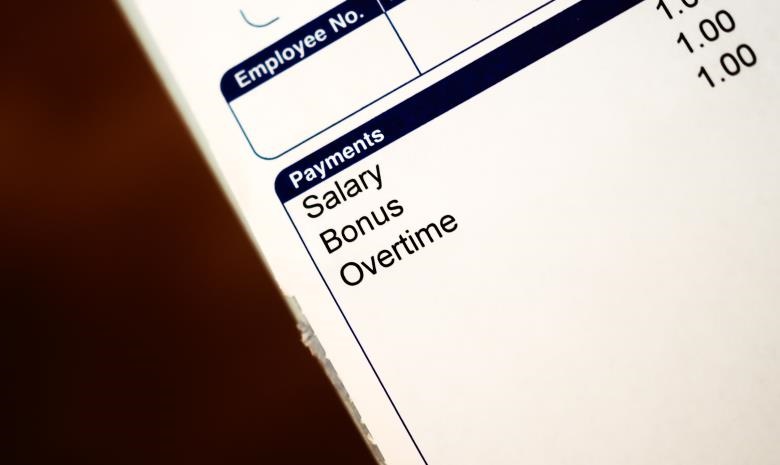
As some of you may be aware, there is a New Legislation that applies from 6th April 2019 that will require all employers to (a) provide payslips to all workers, and (b) show hours on payslips where the pay varies by the amount of time worked.
This guidance is to help employers, workers to understand the basics with the new legislation. Please find the main changes as follows:
Showing hours on payslips
Where pay varies by time worked From April 2019 additional information must be shown on a payslip for workers whose pay varies depending on the number of hours they have worked. The hours can be shown either as a single total of all such hours in the pay period, or they can be broken down into separate figures for different types of work or different rates of pay. It should be clear which pay period they were worked in. They only need to be shown for pay periods which begin on or after 6 April 2019. The hours that must be shown on a payslip are a separate matter from the number of hours worked for National Minimum Wage (NMW) purposes (although for workers who are paid by the hour, they may well in practice be the same).
Variations caused by unpaid leave or statutory sick pay
If a worker’s pay does not vary by time worked (for example because they are paid a fixed salary each month) there is no need to include an hourly figure to account for variations in pay caused by taking unpaid leave or being on statutory sick pay. Such cases do not amount to pay varying depending on the amount of time worked, but rather to pay varying because of a departure from the normal working and pay arrangements, caused by the unpaid leave or statutory sick pay. However, if a worker is paid according to the amount of time worked and takes unpaid leave or receives statutory sick pay any hours they did work will still need to be included on their payslip.
Enforcement
A worker who thinks that they have not received a payslip, or that the payslip they have received lacks the required information, may bring a claim before an Employment Tribunal.
For more details on the upcoming changes speak to one of our Payroll Experts.
by Acuaccounts | Feb 8, 2019 | accounting, latest news
You may have seen previous blogs or newsletters from us regarding Making Tax Digital (MTD). However, here is a reminder.
What is MTD?
Making Tax Digital is an attempt made by the HMRC to do exactly what the name suggests. Currently, once a year, businesses have to file one headache of a document but once MTD is implemented, small businesses will be enforced to keep electronic records of their accounts using software which has been approved by HMRC. Business will have to file their tax information digitally and on a quarterly basis.
With a personal digital account, individuals will be able to send the information directly to HMRC and check details throughout the year to make sure that they are correct. This means there will be no more hunting around for receipts come tax time so in theory, an easier system all round.
Who will this affect?
From April 2019 if the business is currently above the VAT threshold (£85,000) businesses will need to keep their records digitally for VAT purposes.
It is likely smaller businesses will be required to keep digital records shortly after. This changes the way HMRC wants information from taxpayer and means that you may need to move from your existing desktop or manual record keep and onto an online accounting package
The good news is that AcuAccounts are certified in the installation and operation of Online Accounting software which is digitally compliant and specifically designed for small and medium-sized business.
How can AcuAccounts help you?
We have teamed up with various major Cloud software companies to provide our clients with the best possible fully compliant accounts package. The advantages are:
- It’s on the Cloud so you can get a clear view of your finances any time any place
- Run your business from work, home or on your mobile app
- Use your mobile to photograph purchase invoices and expenses and upload these to the software
- It automatically grabs bank statements in real time
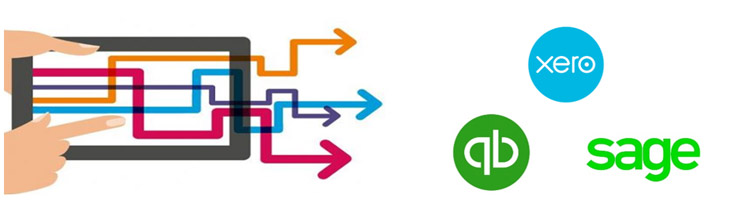
The 3 main Cloud software companies we support are; Sage, QuickBooks and Xero.
The important bit – how much will it cost?
We don’t believe in set packages because we don’t want to sell you something that you won’t use, therefore, we tailor make all our client packages based on the features of which we think will be useful to you.
Speak to one of our team today for more details: info@acuaccounts.com or 02039079027
www.acuaccounts.com

by Acuaccounts | Dec 12, 2018 | accounting, latest news
All supplies could be classified as exempt, zero-rated or standard rated for VAT purposes. Supplies that are standard-rated or zero-rated are considered to be ‘taxable supplies’ as defined.
The supply of goods and services are generally subject to VAT at the standard rate (20%), unless such supply is specifically zero-rated or exempt in terms of the VAT Act.
A zero-rated supply is a taxable supply on which VAT is levied at the rate of 0%. No output tax will be payable to HM Revenue & Customs in respect of zero-rated supplies. Registered VAT entities making zero-rated supplies are entitled to claim their input tax deductions on goods or services acquired in the course of making such taxable supplies.
An exempt supply (i.e. not a taxable supply) is the supply of goods or services on which no VAT rate is chargeable. Registered VAT entities may not claim an input tax deduction in respect of goods or services acquired in the course of furtherance of making exempt supplies. A person that makes only exempt supplies cannot register for VAT as they are not providing taxable supplies as per the VAT Act.
Where goods and services are purchased for taxable and non-taxable purposes, only a portion of the input tax may be claimed. VAT registered entities making mixed supplies (taxable and exempt supplies), are required to apportion their input deduction to the extent to which the entity has utilised the goods or services in the course and furtherance of making taxable supplies.
Confusion often exists about ‘VAT at a Zero-Rate’, ‘Exempt supply’ and ‘Non-supply’. The main difference between zero rate and exempt supplies is that the suppliers of zero-rated goods and/or services can still reclaim all their input VAT, but the suppliers of exempt goods are either not registered for VAT or if they are, they cannot reclaim their input VAT. Examples of VAT at a Zero rated items and services include:
- Petrol leaded or unleaded;
- Mahango, mahango meal, maize meal and bread, but not as a prepared meal;
- Water and electricity to a residential account;
- Selling of residential property;
- Fresh milk
- Sunflower oil
For more information on anything related to VAT feel free to get in touch with one of our experts.

by Acuaccounts | Nov 12, 2018 | accounting, latest news
Do you purchase business-related equipment, stationary & so on from Amazon? If so why not create an Amazon Business account!
If you have not already done so, this is a great feature to utilise from accounts and record keeping as this enables you to gather:
- VAT exclusive pricing and VAT invoicing: See prices with and without VAT and benefit from VAT invoicing. This is great for when working out VAT Returns, note Amazon itself is not VAT registered
- Visibility and control: Add a Purchase Order number to orders, add multiple users, set spending limits, enable purchasing approval workflows and gain visibility into spending with Amazon Business Analytics
- Reconciliation: Easier to reconcile for your Accountant/Bookkeeper against payments, access can also be given to your accountant/bookkeeper
- Keep it Separate: Keep things separate from Personal and Business Related
In addition to competitive pricing and great selection, Amazon Business customers have access to the following features:
- Free One-Day Delivery: Free premiums shipping on qualified orders of £30 or more.
- Detailed transaction data on commercial card purchases: Track and reconcile business purchases with line-item detail on every Amazon Business purchase made with a Visa Commercial Card issued by Barclaycard, Citi, HSBC or Lloyds Bank.
- 30 days credit and paid by invoice options
Wondering how and why this would benefit your Company?
Speak to one of our team for more details.

Recent Comments